



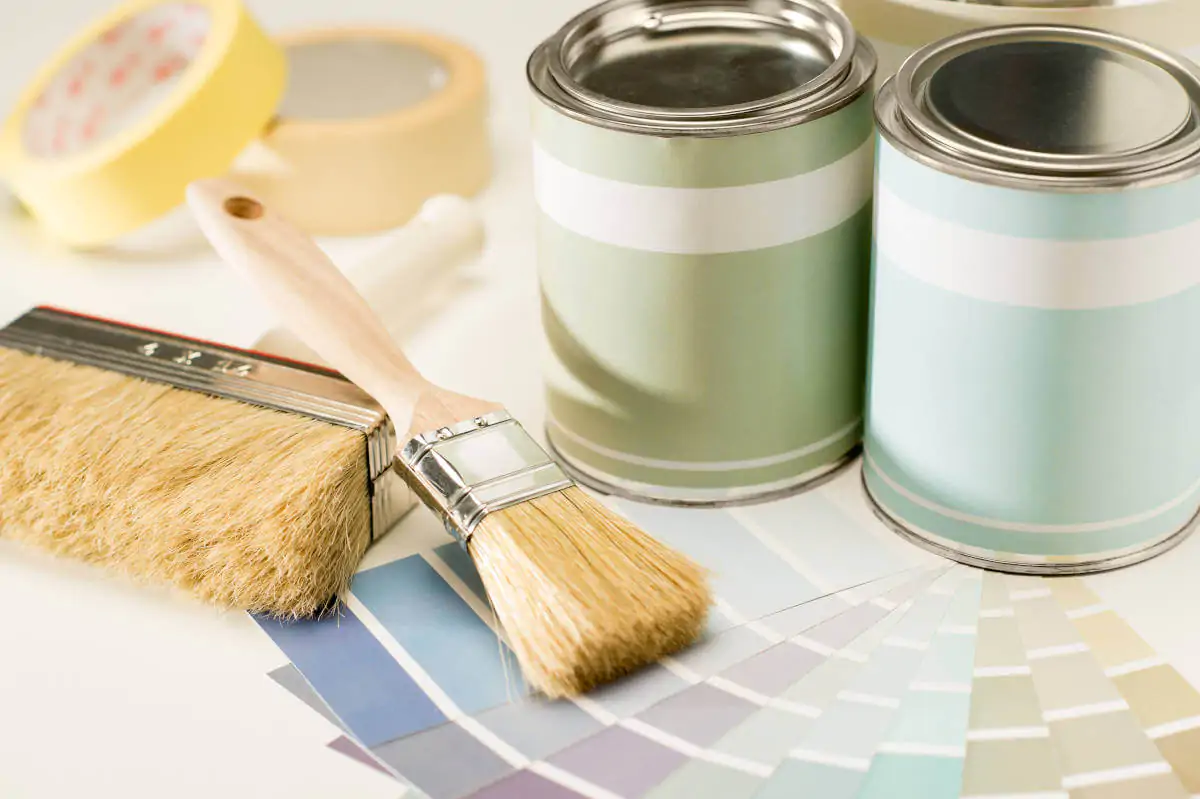
Calculating Paint Quantities
A Guide to Calculating Paint Quantities
There can be slight variations in colour between different batches of the same paint, this is especially true when paint is mixed to order, for this reason you will want to make sure that you order all your paint at the same time before you start your project. Fortunately, calculating the amount of paint you need is not that tricky, so follow our 5-step process and then place your order.
What you need:
- pen
- paper
- calculator
- tape measure
1. Measuring the Area to be Painted
The first step is to measure the wall, door, or object you are painting. You need to know the height and length of each surface. Once you have the height and length you can multiply them together to get the total surface area which is to be painted.
Measuring simple surfaces and walls without windows and doors
If you are painting a wall grab a friend and a tape measure and simply measure the height and length of the first wall and multiply these together.
Multiplying the two numbers gives you the surface area you need to paint, this is now the overall square metre measurement for the wall.
You now have the surface area in metres squared (m²) for simple surfaces.
Measuring Walls with Windows & Doors
If the wall you are painting has windows or doors, it is often easiest to measure the wall by taking the whole length and height of the wall and then subtracting the doors and windows from this. To do this measure the whole length of the wall and the height and multiply them to get the surface area (as we did in step 1 above).
Next measure the height and width of the door or window, and multiply this together, this will give you the surface area of the door or window.
Then take the surface area of the wall and subtract the surface area of the door or window. This is now the new surface area for the wall.
Repeat this process for each door or window, taking it off the new surface area each time.
You now have the surface area in metres squared (m²) for walls with windows and doors.
2. Calculating the Total Surface Area to be Painted
Once you have calculated the surface area for each wall or surface you want to paint, you need to add each one together. Adding the surface areas together will give us the total surface area we need to paint.
Don't forget, if you are using different paints for different walls or surfaces, make sure you total them up separately.
You now have the total surface area, in metres squared (m²), you need to paint.
3. Number of Coats of Paint
The next step is to multiply the total surface area by the number of coats of paint you need. The coats of paint is the minimum number of times you will need to paint the wall or surface area to get an even coat.
Each paint will come with a recommendation for the number of coats of paint required to achieve a good finish. If you have already chosen your paint you will be able to find this on the paint tin or see it in the paint product information (look for the 'specification' or 'additional information' if you can't see it on the product display page).
Once you have found the number of coats of paint you need multiply this number by the total surface area calculated in step 2 above. This will give you the total number of square metres you need to paint.
Top tips
- If you haven't chosen your paint and just want to get an idea to help with budgeting, we would recommend factoring in at least two coats. You should then check again once you have chosen a paint.
- You may need an additional coat of paint if you are painting a lighter coloured paint over a much darker paint, if you think this may be the case then factor in an additional coat;
- Lower quality paints may have less pigmentation or be watery, this may mean they need more than two coats of paint to achieve an even coat.
You now have the total number of square metres you need to paint.
4. Working out the Amount of Paint needed
Each tin of paint will give an estimate about how much surface the paint will cover per litre, this is expressed in metres squared per litre (m²/l). If you can"t see the coverage on the tin, have a look online at the product information section online. To work out how many tins of paint we need we will first work out how many litres we need. To do this we take the total number of square metres (which we calculated in step 3 above) and divide it by the coverage given on the tin of paint. This is now the number of litres of paint needed.
To make sure we have enough paint to touch up any areas, in case of spillage, and because some may be left on the brushes and in paint trays, it is recommended you order a little bit extra. It might be that you will have enough if you round up the amount to the next whole litre, but if not consider adding another litre (having some spare in the cupboard for touching up any damage or marks is useful).
5. Order Your Paint
Now we know the number of litres of paint needed we need to work out how many paint tins we need. Paint tins tend to come in sizes of 1 litre, 2.5 litres and 5 litres. Larger paint tins can be better value than smaller paint tins so start by adding the largest paint can sizes first and then making up the balance with smaller tins until you have the amount of paint in litres you calculated in step 4 above.
Trending Paint ColoursTM Interiors
Can"t find what you"re looking for? We can help.
Call our customer support team on +44(0)1733230499 or email us.

Related Articles
Guide to Room Orientation
How to paint for room orientation.
Oil v Acrylic Gloss Paint
TM Interiors guide to gloss paint.
TM Interiors guide to paint finishes.
How to paint a wall in 10 easy steps.